About Herringbone Flooring
Herringbone flooring is a style of wood, tile, or vinyl flooring where rectangular planks are laid at 90-degree angles to one another in a repeating zigzag, creating a pattern that resembles the bones of a herring fish. It's one of the oldest and most recognizable flooring patterns in the world, and today it's most commonly installed using engineered hardwood — the same material Besso's herringbone collection is built from. Below, we'll walk through what herringbone flooring actually is, the materials it can be made from, how it's installed, and how to decide if the pattern is right for your space.
What Is Herringbone Flooring?
Herringbone flooring is a plank flooring pattern, not a material on its own — short rectangular planks are cut and laid so that the end of one plank meets the long edge of the next at a right angle, forming a continuous V-shaped zigzag across the room. Because the pattern relies on precise, repeated plank cuts rather than a simple straight-line layout, herringbone reads as more detailed and formal than standard plank flooring, even when it's made from the same wood species and finish.
The History and Origin of the Herringbone Pattern
Herringbone is one of the oldest documented flooring patterns still used today. Its earliest known use dates back to Roman road construction, where a herringbone brick-laying technique called opus spicatum ("spiked pattern") was used to pave streets because the interlocking layout distributed weight and resisted shifting better than a straight-line layout. Centuries later, the pattern moved indoors and became a defining feature of French parquet flooring — most famously in the wood parquet floors of the Palace of Versailles, where herringbone and related geometric patterns became a symbol of luxury interior design.
Why It's Called "Herringbone"
The name comes directly from the pattern's resemblance to the skeleton of a herring fish, where the bones branch off the spine at consistent angles. It's a purely visual naming convention — the term has no connection to the flooring material itself, which is why you'll see the exact same herringbone name applied to wood, tile, laminate, and vinyl.
From Roman Roads to French Parquet Floors
The jump from Roman paving to European interiors happened gradually through the medieval and Renaissance periods, as wood parquetry became a status symbol in wealthy homes across France and other parts of Europe. By the 17th century, herringbone and chevron parquet were common in grand estates, and the pattern has remained a marker of classic, formal interior design ever since — which is part of why it still reads as a premium upgrade in a modern Canadian home today.
What Materials Can Be Laid in a Herringbone Pattern?
Herringbone can be created with almost any rectangular flooring plank or tile: engineered hardwood, solid hardwood, laminate, luxury vinyl plank (LVP), and porcelain or ceramic tile can all be cut and installed in a herringbone layout. Besso's herringbone collection is built around engineered hardwood, which is the most common and most dimensionally stable material for the pattern, but the sections below cover how each material performs in herringbone so you can choose the right option for your project.
Herringbone vs. Chevron: What's the Difference?
Herringbone and chevron are the two patterns people confuse most often, and the difference comes down to the plank ends. Herringbone planks have a straight, squared-off end that meets the next plank at a 90-degree angle, creating a stepped, broken zigzag. Chevron planks are mitre-cut at an angle on both ends so they meet in a continuous, unbroken V. Because chevron requires angled cuts on every plank rather than a simple square cut, it typically costs more to produce and install than herringbone.
Herringbone Flooring by Material
Besso's in-stock herringbone collection is engineered wood flooring, sold in matched left- and right-facing plank pairs so each pair locks together into the pattern. Below is a look at how engineered wood herringbone compares to the other materials the pattern is commonly made from.
Engineered Herringbone Wood Flooring
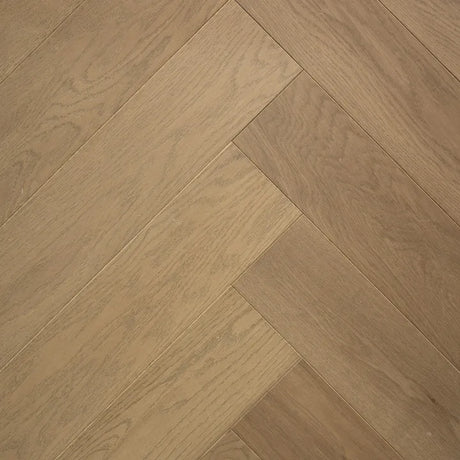
Engineered wood is a real hardwood veneer bonded to a multi-layer plywood core, which makes it more dimensionally stable than solid wood — a meaningful advantage in herringbone, since the pattern already has more seams and joints per square foot than a standard straight-plank floor. That added stability means engineered herringbone handles Ontario's seasonal humidity swings well and can be installed over underfloor heating and in basements where solid hardwood typically isn't recommended. Besso's collection includes both our own house-brand planks and the Oakel City line, spanning natural, warm, and deep-toned finishes.
Engineered Herringbone — Natural Tones
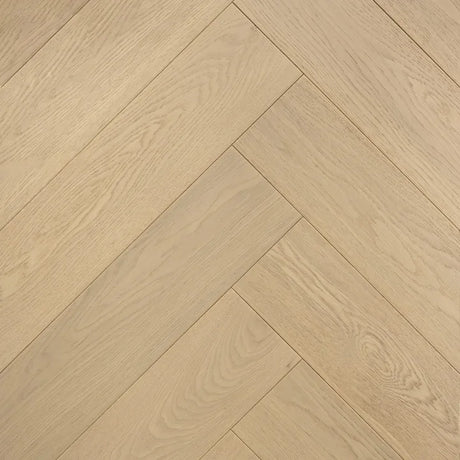
For a lighter, understated look, Natural Tint and Fortino are Besso's softest engineered herringbone finishes, both in a 5" x 3/4" plank designed to keep the wood grain visible without a heavy stain. These tones pair well with contemporary and Scandinavian-style interiors where you want the pattern itself, rather than a bold colour, to be the focal point.
Engineered Herringbone — Wire-Brushed Finish
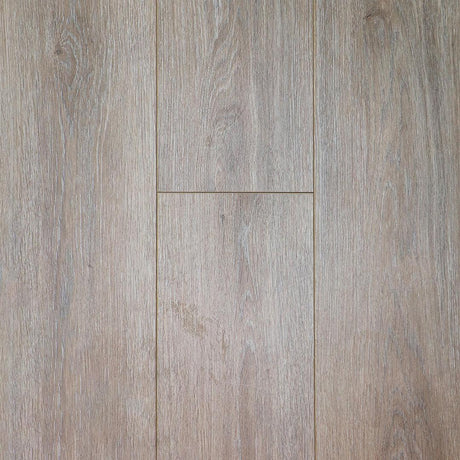
Wire-brushing is a surface treatment where the wood is mechanically brushed to open up the grain and add texture, giving the plank a more rustic, hand-finished look and helping hide everyday wear, dust, and minor surface scuffing better than a smooth, high-gloss finish. It's a strong option for busy households that want the classic herringbone look without the maintenance concerns of a glass-smooth finish.
Engineered Herringbone — Warm & Deep Tones
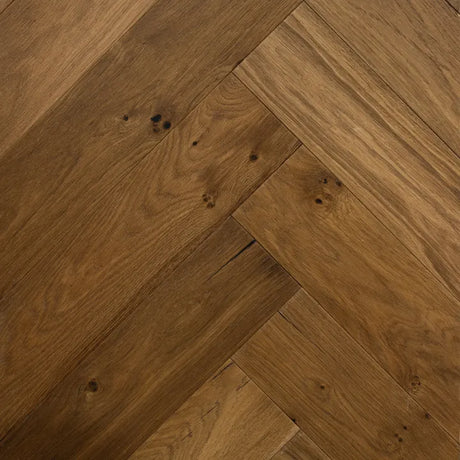
Sandy Brown, Natural Dark, Harrison, Portobello, and Paradise round out Besso's deeper engineered herringbone tones, ranging from warm honey-brown to rich chocolate finishes. These tones tend to suit traditional and transitional interiors and are a popular choice for entryways and living rooms where a herringbone floor is meant to make an immediate visual statement.
Solid Herringbone Hardwood Flooring
Solid hardwood can also be cut and installed in a herringbone pattern, and it offers one advantage engineered wood can't fully match: it can be sanded and refinished many times over its lifespan, which is useful if you expect to change the floor's colour or repair wear decades down the line. The tradeoff is that solid wood expands and contracts more with humidity, and it isn't recommended over underfloor heating or in below-grade rooms. If a solid herringbone floor is part of your project, our design team can help source and plan the layout — visit our solid hardwood flooring collection to see the species and widths available.
Herringbone Laminate Flooring
Laminate is a photographic wood-look layer fused to a dense fibreboard core, and it's a budget-conscious way to get the herringbone look with strong scratch and dent resistance — a good fit for households with pets or kids. Besso's herringbone collection is currently focused on engineered wood, but our laminate flooring range includes plank styles that our design team can help plan into a herringbone layout with your installer; see our guide on how to install laminate flooring for a look at the general installation process.
Herringbone Vinyl Plank (LVP) Flooring
Luxury vinyl plank (LVP) is a fully waterproof, resilient flooring option, which makes herringbone-pattern vinyl a popular choice for bathrooms, mudrooms, and basements where wood and laminate are less practical. As with laminate, our vinyl flooring collection can be planned into a herringbone layout by our design team and your installer — take a look at our vinyl plank installation guide and our laminate vs. vinyl comparison if you're deciding between the two for a wet-area herringbone project.
Herringbone Tile & Parquet Flooring
Porcelain and ceramic tile can be cut into small rectangular "brick" shapes and laid in a herringbone pattern, which is especially popular in bathrooms, entryways, and kitchen backsplashes where a wood-look floor isn't practical. Porcelain is denser and more water-resistant than ceramic, which is why it's the more common choice for wet, high-traffic herringbone tile floors — read more in our guide on the difference between porcelain and ceramic tiles. Browse our full tile collection to see current herringbone-ready tile sizes.
Is Herringbone Flooring More Expensive?
Yes — herringbone flooring usually costs more than the same product installed in a straight pattern, but the extra cost comes from installation rather than the flooring itself. The pattern requires more layout time, more cutting, and more waste because every plank has to be positioned precisely to keep the zigzag aligned across the room. Most installers also charge a higher labour rate for herringbone because it takes significantly longer than a standard plank installation. Material costs vary by product, but the installation premium is generally the biggest reason herringbone projects cost more overall.
Material Cost vs. Installation Cost
The flooring itself isn't always dramatically more expensive — especially with engineered wood products manufactured specifically for herringbone layouts. Labour is where the difference shows up. Installers spend more time establishing the starting line, checking alignment, cutting border pieces, and maintaining consistent spacing throughout the room.
Waste Factor
Because the pattern creates more cuts around walls, corners, and doorways, you'll usually need to order more material than you would for a straight installation. While a typical straight plank floor often requires around 10% extra material for waste, herringbone installations commonly require 15% or more depending on the room shape.
Where Does Herringbone Flooring Work Best?
One of the biggest strengths of herringbone is that it works in almost any room, but the effect changes depending on the size and function of the space. In larger rooms the pattern becomes a dramatic design feature, while in smaller spaces it can add movement and make the floor feel more custom without overwhelming the room.
Living Rooms
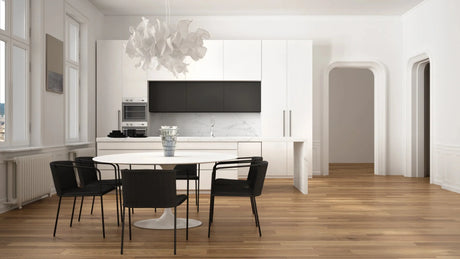
Living rooms are one of the most popular places for herringbone because the uninterrupted floor area allows the pattern to become a focal point. Engineered hardwood herringbone pairs especially well with open-concept layouts where the pattern can flow continuously between seating and dining spaces.
Entryways & Hallways
Because the pattern naturally draws the eye forward, herringbone is an excellent choice for entryways and long hallways. The repeating zigzag adds visual interest without requiring additional rugs or decorative flooring borders.
Bedrooms
Bedrooms benefit from the warmth and texture of engineered wood herringbone, particularly in lighter natural oak finishes. The pattern adds character while still feeling calm enough for a space intended for rest.
Kitchens
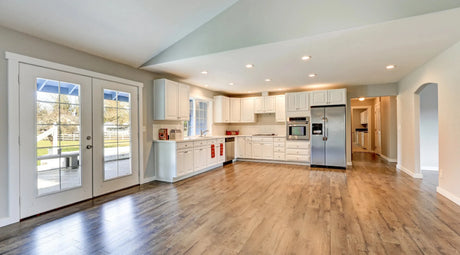
Herringbone can work beautifully in kitchens, especially when installed with engineered hardwood, luxury vinyl plank, or porcelain tile. If moisture is a concern, waterproof vinyl or porcelain tile are often the better long-term choice.
Basements
For below-grade spaces, engineered hardwood and waterproof luxury vinyl are generally the safest herringbone options because they're more dimensionally stable than solid hardwood in changing humidity conditions.
How Is Herringbone Flooring Installed?
Unlike standard plank flooring, herringbone begins from a carefully measured centre line rather than a single wall. Every plank depends on the position of the previous one, so even a small alignment error at the start can become noticeable across the room. For that reason, professional installation is recommended for most herringbone projects.
Starting the Layout
The installer establishes a centre line or reference line before laying the first pair of planks. From there, the pattern grows outward while maintaining consistent spacing and alignment.
Left & Right Planks
Most engineered herringbone products are manufactured with matching left- and right-hand planks that lock together to create the repeating pattern. Mixing these correctly is essential for maintaining the layout.
Expansion Gaps
Like any wood flooring, engineered herringbone requires proper expansion space around the perimeter of the room to allow for seasonal movement. Baseboards or trim pieces later cover these gaps.
Professional Installation
Because layout accuracy is critical, herringbone is one of the few flooring styles where professional installation is strongly recommended. If you're planning a project, our team can help you choose the right material and estimate the quantity you'll need before installation begins.
How to Clean & Maintain Herringbone Flooring
Herringbone floors are maintained the same way as any other floor made from the same material. Regular sweeping or vacuuming removes grit that can scratch the finish, while occasional damp mopping with a cleaner designed for your flooring type helps preserve its appearance.
Engineered Hardwood Care
Use a hardwood-safe cleaner and avoid excessive moisture. Felt pads under furniture and entry mats help reduce scratches and wear.
Vinyl & Laminate Care
Vinyl and laminate are easy to clean with a damp mop and manufacturer-approved cleaner. Avoid abrasive scrubbers that could damage the wear layer.